

Augmented Reality in Brand Experiences: How AR Is Transforming Customer Engagement
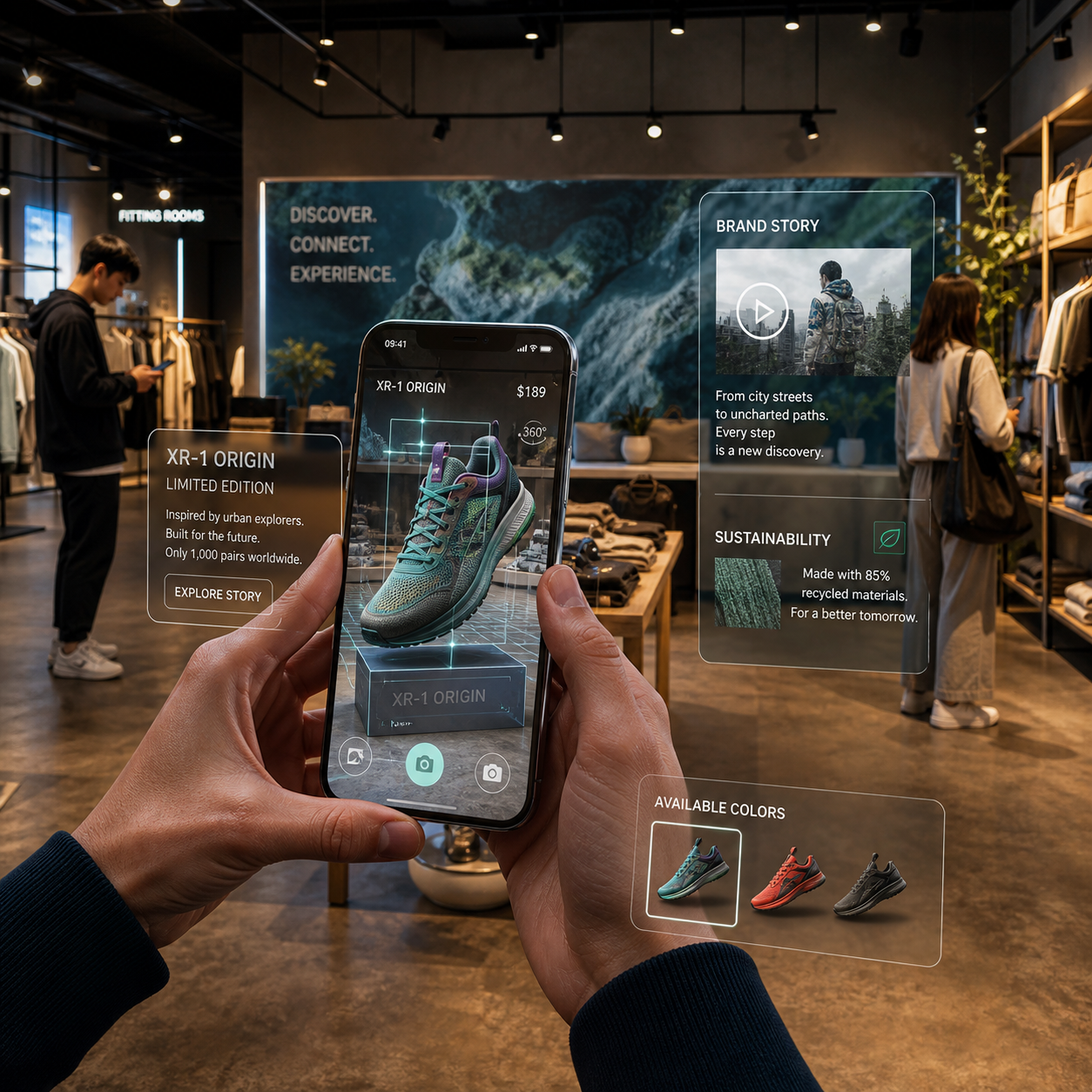
Augmented reality is changing how people discover, evaluate, and remember brands. Instead of presenting a product through a flat advertisement or static webpage, AR places digital information, 3D content, and interactive experiences within the customer’s physical environment.
For marketers, that creates a new bridge between experiential marketing and useful digital service. A customer can preview furniture in a room, try on sunglasses, scan packaging for a game, or explore a product demonstration at an event. The strongest campaigns do not use AR simply because it looks futuristic. They use it to remove uncertainty, invite participation, or make a brand easier to understand.
What Is Augmented Reality in Brand Experiences?
Augmented reality in brand experiences is the use of digital overlays, interactive graphics, sound, and 3D content to enrich a person’s view of the real world while they interact with a brand. Unlike virtual reality, which replaces the physical environment, AR adds a digital layer to it.
AR usually works through a smartphone camera, a tablet, smart glasses, or another sensor-equipped device. Computer vision identifies surfaces, objects, faces, images, or geographic locations. The system then anchors virtual elements to those points so they appear to remain in place as the user moves.
This makes AR different from conventional digital marketing. A banner ad asks for attention on a screen; an AR experience asks the customer to look, move, test, or create something. The interaction can support a brand experience before purchase, during product use, or after checkout.
WebAR allows users to access many experiences through a mobile browser, often by scanning a QR code or opening a link. Mobile AR applications can provide deeper features, saved preferences, push notifications, and more reliable performance, but they require an app download. The right choice depends on the audience, campaign duration, data requirements, and expected frequency of use.
Why Brands Are Investing in AR Experiences
Brands invest in AR experiences because the format can turn passive exposure into active customer engagement while producing measurable interaction data. It is especially valuable when customers need to visualize, compare, personalize, or understand something before making a decision.
AR can improve product understanding by showing scale, function, color, or placement in context. A furniture retailer, for example, can let shoppers view a digital sofa in their own living room. That experience addresses a practical question more effectively than a product photograph alone.
It can also make personalization visible. Beauty brands may offer virtual makeup try-ons, while eyewear companies can map frames to a user’s face. These tools can narrow choices and encourage exploration, although they should clearly communicate that digital visualization may not perfectly represent fit, shade, or physical texture.
Memorability is another benefit. When people actively participate in a brand story, they often have more material to recall and share. However, novelty by itself has a short lifespan. The useful test is simple: Does the AR interaction help the customer do something better, faster, or more enjoyably?
Measurement can include scans, session starts, dwell time, interaction depth, product views, shares, add-to-cart actions, store visits, and completed purchases. These metrics become meaningful only when connected to a defined objective. A campaign designed for product education should not be judged solely by sales completed during the same session.
Key AR Use Cases for Brands
Key AR use cases for brands include virtual try-ons, product visualization, interactive packaging, location-based discovery, event activations, and immersive storytelling. Each works best when it solves a specific customer problem rather than adding decoration.
Virtual try-ons and product visualization
Virtual try-ons let customers preview cosmetics, eyewear, footwear, accessories, or clothing through a camera. Product visualization extends the same principle to furniture, appliances, vehicles, and home improvement products. The objective is usually to reduce uncertainty and help customers make a confident shortlist.
Accuracy matters. Lighting conditions, camera quality, body positioning, and device capability can affect the result. Brands should provide clear product information alongside the visualization instead of implying that an AR preview replaces physical testing.
Interactive packaging and product discovery
Packaging can become a gateway to digital content when a customer scans a label, logo, or printed marker. A food company might reveal recipes, sourcing information, or a game. A consumer electronics brand could show setup instructions, feature demonstrations, or troubleshooting guidance.
This approach extends the brand experience beyond the shelf. It also gives packaging a measurable post-purchase role, provided the scan leads to content that remains useful after the initial launch.
Location-based experiences and events
Location-based AR can connect digital content to stores, landmarks, venues, or public spaces. At a product launch, visitors might follow virtual clues, unlock a 3D demonstration, or see a digital character appear at specific points around an event site.
These activations can create shared moments, but they require careful planning for signage, network conditions, crowd flow, safety, and permissions. An experience that blocks walkways or requires users to stare at their phones in a busy environment quickly loses its appeal.
Immersive storytelling
AR storytelling can reveal a product’s origin, illustrate a manufacturing process, or place characters and information into a customer’s surroundings. The format is particularly effective for campaigns with a strong sense of place or physical artifact.
How AI Enhances AR Brand Experiences
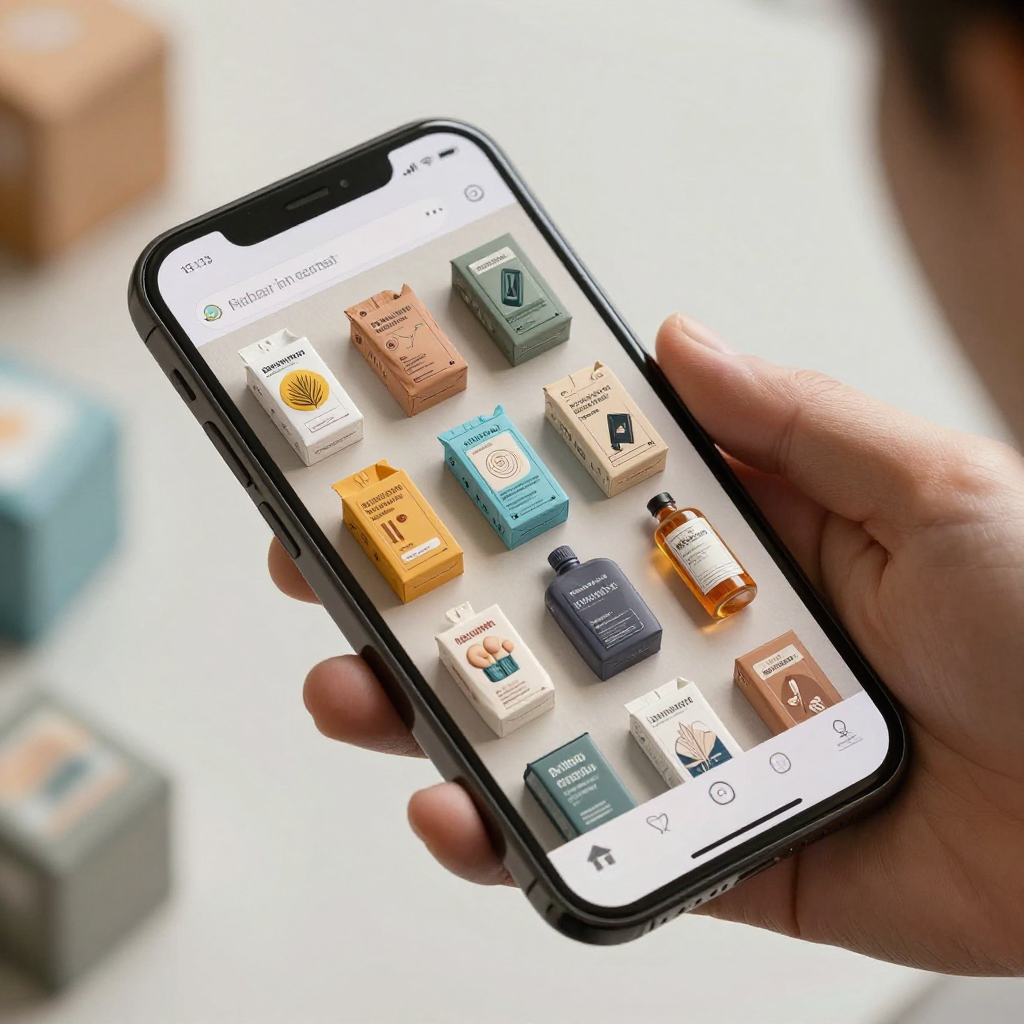
Artificial intelligence enhances AR brand experiences by helping systems recognize environments, personalize content, understand language, and generate digital assets more efficiently. AI makes AR more responsive, although it also introduces important questions about accuracy, consent, and data use.
Computer vision can identify surfaces, products, faces, gestures, and objects. This allows an AR system to place content more accurately or respond to what a customer points toward. In retail, recognition may help connect a physical item with product details, care instructions, or compatible accessories.
AI recommendation systems can adapt the experience to a customer’s stated preferences, previous interactions, or current context. A virtual showroom could suggest colors and models based on selected criteria. Recommendations should remain explainable and easy to override; personalization becomes intrusive when customers cannot understand why content appears.
Conversational interfaces add another layer. A customer could ask an AR assistant how a product works, whether an item is recyclable, or which accessory fits a particular model. Natural language makes the experience more accessible than forcing users through menus and icons.
Generative AI can also support the production of 3D content, copy, localized instructions, and campaign variations. Human designers still need to check brand consistency, intellectual property, accessibility, and factual accuracy. Faster content creation is valuable only when the resulting experience remains coherent.
Designing an Effective AR Brand Experience
To design an effective AR brand experience, begin with a customer need, choose the lowest-friction access method, simplify the interaction, and define measurement before development. Creative ambition should support the brand goal rather than compete with it.
Start with the audience and objective
Ask who will use the experience, where they will encounter it, and what action should follow. A store-based product visualizer has different requirements from a festival activation or a post-purchase support tool.
- Audience: What devices, connectivity, abilities, and technical confidence are likely?
- Access: Can WebAR provide enough value, or does the experience justify a mobile AR application?
- Interaction: What is the shortest path from scan to useful outcome?
- Measurement: Which behaviors indicate progress toward the business objective?
- Data: What information is collected, why is it needed, and how long is it retained?
Reduce friction and design for inclusion
Use clear instructions, visible QR codes, fast loading, and a meaningful first interaction. Avoid making users create an account before they understand the benefit. Offer text alternatives, captions, audio descriptions, readable contrast, and controls that do not rely only on precise gestures.
Privacy should be part of the interface. Camera access, face mapping, location data, and behavioral analytics need plain-language explanations and appropriate consent. A campaign can be technically impressive and still damage trust if its data practices feel hidden.
Test on a representative range of devices and network conditions. Measure time to first meaningful interaction, not just whether the experience technically launches. A useful planning framework is purpose, path, proof, and protection: define the purpose, shorten the path, prove value through measurement, and protect user data throughout.
Challenges and Limitations of AR Marketing
The main limitations of AR marketing are device fragmentation, development cost, technical reliability, user adoption, content maintenance, and the risk that novelty overshadows customer value. These constraints should shape the concept from the beginning.
Older phones may struggle with advanced 3D models, face tracking, or real-time rendering. Browsers also differ in camera permissions and AR capabilities. Supporting more devices increases testing time and can require a simpler fallback experience.
Development costs vary according to the number of platforms, 3D assets, AI features, integrations, and security requirements. Choosing a highly customized mobile application for a short campaign may provide richer functionality, but it can reduce participation because users must download and update software.
Content maintenance is often overlooked. Product catalogs change, promotions expire, operating systems update, and links break. Brands should assign ownership for model updates, analytics review, accessibility checks, and support after launch.
Three common mistakes deserve attention:
- Building the effect before defining the job: Teams may chase a visually impressive filter without identifying the customer or business problem. Correct this by writing one measurable experience objective first.
- Hiding the value behind too many steps: App downloads, registrations, permissions, and tutorials can cause abandonment. Test the first minute with people unfamiliar with the campaign.
- Treating privacy as a legal footnote: Unclear camera, facial, or location-data practices reduce trust. Explain collection in plain language and minimize data by design.
- Launching without a fallback: A failed camera permission or unsupported browser can end the interaction. Provide product pages, video demonstrations, or accessible non-AR instructions as alternatives.
The Future of AR and Brand Engagement
The future of AR and brand engagement will combine artificial intelligence, spatial computing, wearable devices, and context-aware services that respond to a customer’s environment. Progress will depend less on spectacular overlays and more on useful, persistent interactions.
Spatial computing brings digital objects into a more continuous relationship with physical space. Headsets and smart glasses may eventually let customers receive directions, product information, translations, or assistance without holding a phone. Adoption will depend on comfort, price, battery life, social acceptance, and clear everyday benefits.
AI could make these experiences conversational and adaptive. A customer entering a store might receive optional guidance based on a shopping goal. An industrial product could display step-by-step maintenance information while recognizing the exact component in view. Such systems must give users control and avoid making assumptions from sensitive personal data.
For brands, the strategic opportunity is to treat AR as an evolving service layer rather than a one-off campaign. The strongest future experiences will connect discovery, purchase, ownership, and support while preserving a consistent identity across screens, spaces, and devices.
AR is already practical in product visualization, retail assistance, packaging, events, and storytelling. Its long-term value will come from disciplined design: solve a real customer problem, make access easy, measure the right behavior, and use AI where it improves relevance without compromising trust.
Frequently Asked Questions
What is augmented reality in marketing?
Augmented reality in marketing adds digital content to a customer’s view of the physical world through a phone, tablet, headset, or wearable device. Brands use it to demonstrate products, support discovery, create interactive campaigns, and improve customer engagement.
How do brands use AR to engage customers?
Brands use AR for virtual try-ons, product visualization, interactive packaging, location-based games, event activations, immersive storytelling, and guided product support. Each use case works best when it helps customers make a decision or complete a task.
What is the difference between WebAR and app-based AR?
WebAR runs through a mobile browser and usually offers faster access because users do not need to install an application. App-based AR can provide deeper features, persistent profiles, notifications, and more control over performance, but the download requirement creates additional friction.
How does AI improve augmented reality experiences?
AI improves AR through computer vision, personalization, conversational interfaces, recommendation systems, and automated creation of some 3D and written content. It can make an experience more relevant and responsive, but brands must verify outputs and handle camera, location, and behavioral data responsibly.
What challenges should brands consider before launching an AR campaign?
Brands should assess device compatibility, access friction, development and maintenance costs, network reliability, accessibility, privacy, content accuracy, and measurement. They should also provide a non-AR alternative so customers are not excluded when the technology fails or is unavailable.