
Space Technology Commercialization Trends: What’s Shaping the Future
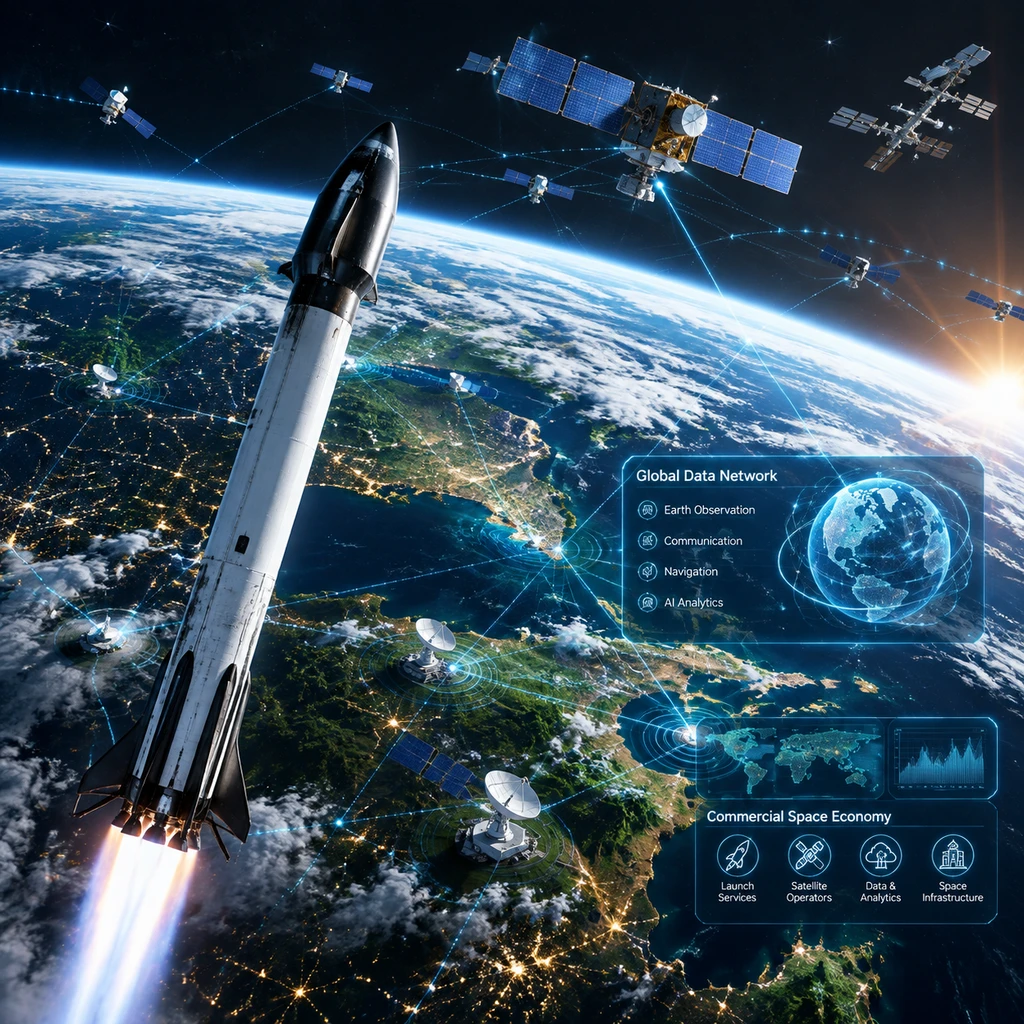
Space technology commercialization is expanding the role of private companies in building, operating, and selling space-based services. The shift is visible in reusable launch vehicles, small satellites, Earth observation, and the growing use of artificial intelligence to turn spacecraft data into practical decisions.
Commercial growth, however, depends on more than new hardware. Companies need customers with recurring needs, dependable technology, workable regulation, and a clear path to revenue. These forces are shaping which ideas become sustainable services and which remain promising demonstrations.
From government-led missions to commercial markets
Space activity is moving from primarily government-funded missions toward a mixed market in which private companies provide launch, satellite, and data services. Public agencies remain important customers and partners, while commercial firms increasingly build capabilities that serve both institutional and private users.
Government contracts can help companies test new systems, establish a first customer, and develop technical experience. Agencies may purchase launch capacity, communications, Earth-observation data, or services delivered by commercial spacecraft. That support can reduce early market risk, though it does not guarantee demand from other customers.
The commercial space industry includes established aerospace contractors, satellite operators, launch providers, and newer firms focused on software or specialized services. The most durable opportunities tend to connect a space capability to a defined need on Earth: communications in areas with limited coverage, timely imagery for infrastructure monitoring, or positioning and timing for systems that depend on accurate location data.
This public-private model also changes how missions are designed. Instead of commissioning a unique spacecraft for every task, a customer may buy a service from a company that owns and operates the equipment. The customer gains access without managing the full mission, while the provider takes on operating costs and technical risk.
Lower-cost access to space
Reusable launch vehicles and small satellites are lowering some barriers to reaching orbit, while cost-conscious mission design helps companies match capability to a specific use. Lower launch prices can make more projects feasible, but they do not remove the costs of building, insuring, operating, and replacing space systems.
A reusable rocket can fly more than once, spreading vehicle development and manufacturing costs across multiple launches. The business benefit depends on reliable reuse, a steady flight schedule, and the expense of refurbishment. Reusability therefore improves the economics of launch when operations support it; it is not an automatic guarantee of cheap access.
Small satellites offer another route to lower mission costs. Standardized spacecraft components and compact designs can support focused tasks such as communications, weather monitoring, or Earth observation. A constellation of small satellites may revisit locations more often than a single large satellite, but it also requires coordination, ground infrastructure, and replacement planning.
Mission designers increasingly make deliberate trade-offs between size, lifespan, resolution, and redundancy. A business collecting broad environmental measurements may not need the same imaging detail as a company inspecting a small industrial site. Choosing a leaner satellite can reduce upfront cost, but a narrower technical margin may leave less room for failure or changing customer needs.
AI-powered satellite operations and space data
Artificial intelligence and machine learning can help satellite operators manage spacecraft and process large volumes of data more efficiently. Their commercial value is clearest when they shorten the path from collecting information to delivering a useful result.
On the operations side, software can help monitor telemetry, detect unusual system behavior, prioritize communications, and schedule observations. These tools can assist human operators, especially across large constellations where reviewing every data point manually is impractical. Decisions that affect spacecraft safety still need appropriate testing, oversight, and fallback procedures.
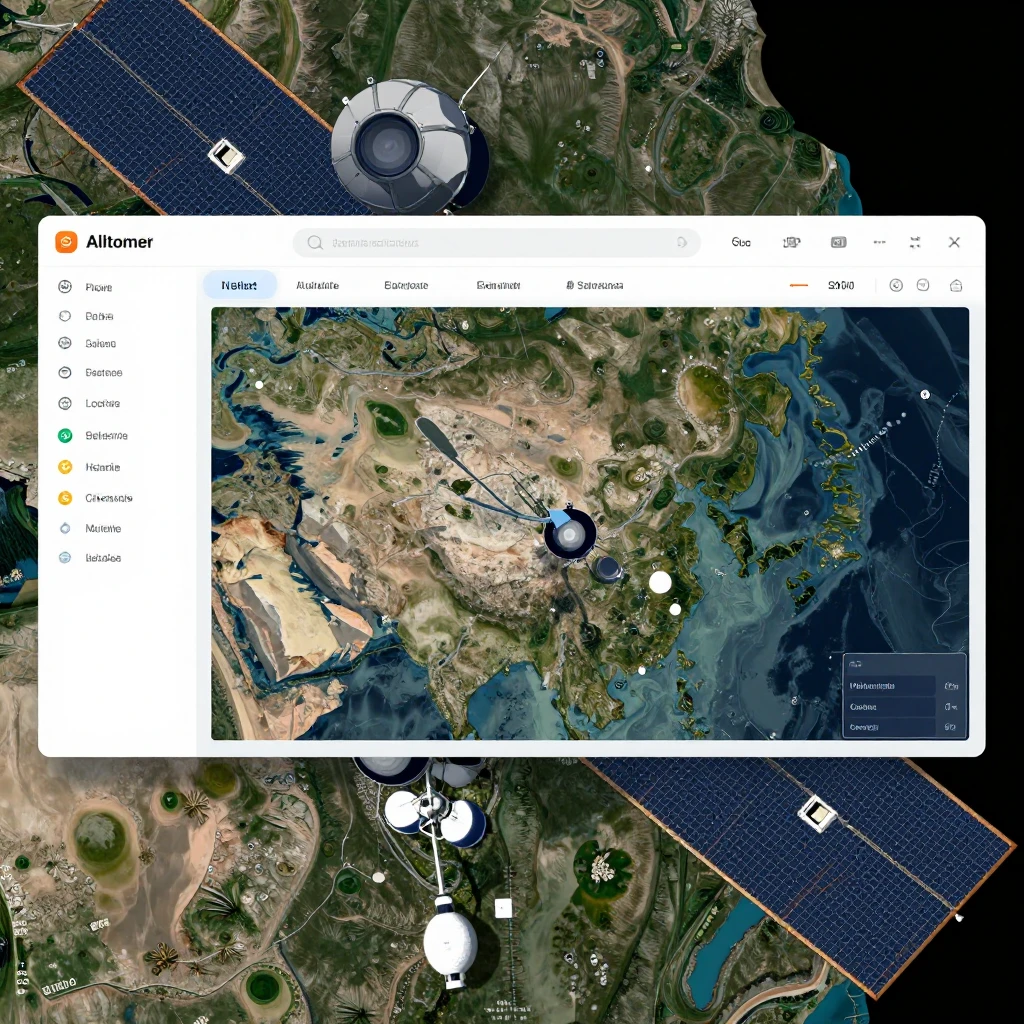
In Earth observation, machine-learning models can identify features or changes in imagery, such as flood extent, vegetation patterns, or construction activity. A customer may care less about receiving a raw image than about a timely alert or a consistent measurement. That creates room for space data analytics companies to combine satellite imagery with weather, mapping, or business data.
AI does not make satellite data automatically accurate or actionable. Clouds, sensor limits, inconsistent training data, and changes in conditions can affect model results. Providers need to show how a result was produced, communicate uncertainty, and validate performance for the customer’s specific use. These checks matter when decisions involve safety, infrastructure, or regulatory reporting.
New services beyond launch and satellites
In-orbit servicing and manufacturing could create commercial services beyond launching spacecraft and collecting data, but many offerings are still developing. Near-term progress is likely to depend on demonstrating reliable operations and identifying customers willing to pay for a specific task.
In-orbit servicing includes activities such as inspecting, repositioning, refueling, or extending the useful life of a satellite. A successful service could reduce the need to replace some spacecraft, but rendezvous and proximity operations require precise navigation, compatible designs, and careful management of safety risks. Many existing satellites were not built with servicing in mind.
In-orbit manufacturing aims to produce or assemble materials and products in the space environment. Research and demonstrations may reveal advantages for particular materials or processes, yet manufacturing at scale faces difficult questions: what product justifies the cost of transport, how it will be returned or used, and whether a customer needs it more than a ground-made alternative.
Other emerging offerings include hosted payloads, space situational awareness, and specialized communications or navigation services. Each adds value in a different way. The practical test is whether the service solves a costly or persistent problem better than terrestrial infrastructure can.
Business models and customers
Commercial space companies earn revenue by selling connectivity, data, access, or specialized operations to customers with repeat needs. Strong business models start with a defined buyer and use case, then work backward to the spacecraft, software, and service level required.
Satellite connectivity providers may sell capacity to governments, businesses, ships, aircraft, or communities outside reliable terrestrial networks. Earth-observation firms may offer subscriptions, imagery, alerts, or analysis tailored to agriculture, insurance, energy, and public agencies. In both cases, the customer often values predictable coverage and usable information more than the satellite itself.
Several models appear across the sector:
- Capacity sales: Customers purchase bandwidth, launch slots, or other defined resources.
- Data subscriptions: Users pay for recurring access to imagery, measurements, or analytics.
- Service contracts: Providers manage a task such as monitoring, communications, or spacecraft operations.
- Public-private procurement: Agencies buy commercial services or co-develop capabilities with companies.
Recurring contracts can support investment in infrastructure, but they take time to win and may rely on a small number of large buyers. Companies should test whether customers will pay for the delivered outcome, not just express interest in the technology. A pilot project is useful evidence, but it is not the same as a repeatable sales channel.
Barriers to commercialization
Space technology is difficult to commercialize because systems are expensive to develop, hard to repair, and exposed to technical, regulatory, and orbital risks. Sustainable growth also requires enough customers to support continued operations and replacement cycles.
Technical risk begins before launch. Components must survive vibration, radiation, temperature changes, and long periods without hands-on maintenance. A failure can interrupt service or end a mission, while redesigns and launch delays can strain budgets. Testing reduces risk but adds time and cost.
Regulation affects launch approvals, spectrum access, remote sensing, export controls, and liability. Requirements vary by jurisdiction and type of service, so companies selling internationally need to account for compliance early. For communications systems, coordination over radio-frequency spectrum is especially important to avoid interference.
Orbital congestion and debris create another business concern. More satellites mean greater demand for collision avoidance, tracking, and responsible end-of-life disposal. Operators may need to invest in monitoring and maneuvering capability, which raises costs but protects both their assets and the wider orbital environment.
Finally, market demand can lag behind technical capability. A high-resolution image or a new in-orbit service matters commercially only if it improves a customer’s decisions enough to justify its price. Companies that confuse a successful demonstration with product-market fit risk building capacity before the revenue base exists.
What to watch next
The next phase of space technology commercialization will be shaped by repeatable services, AI-enabled operations, and better links between orbital data and customer decisions. The strongest signals will be sustained use and reliable revenue, rather than attention around a single launch or demonstration.
Watch for progress in these areas:
- Operational reuse: Whether launch providers can sustain reliable flight rates while managing refurbishment costs.
- Useful AI outputs: Whether satellite analytics deliver validated, timely results that customers act on.
- Responsive constellations: Whether small-satellite networks provide coverage and revisit rates that justify ongoing service costs.
- Servicing demonstrations: Whether in-orbit servicing proves safe, repeatable, and valuable to spacecraft owners.
- Responsible operations: Whether tracking, collision avoidance, and disposal practices keep pace with orbital activity.
The broader trend is a shift from selling space hardware toward selling outcomes supported by space infrastructure. That transition is gradual. Companies that align technical choices with customer needs, account for regulatory and operational limits, and build recurring demand will be better positioned to turn space capabilities into dependable commercial services.
Frequently asked questions
How is AI being used in commercial space technology?
AI helps operators monitor spacecraft, identify anomalies, schedule observations, and analyze satellite data. In Earth observation, machine-learning models can detect patterns or changes in imagery, though results still require validation and clear communication of uncertainty.
Which space services are attracting commercial interest?
Commercial interest includes satellite connectivity, Earth-observation data and analytics, launch services, hosted payloads, and space situational awareness. In-orbit servicing is also emerging, while manufacturing in space remains less established.
What makes space technology difficult to commercialize?
High development costs, launch and operational risks, regulation, orbital congestion, and uncertain customer demand all complicate commercialization. A technically successful mission may still struggle if customers will not pay repeatedly for its service.
How do reusable launch vehicles affect space businesses?
Reusable launch vehicles can spread vehicle costs across multiple flights and increase launch availability when reuse is reliable. Their impact depends on refurbishment expenses, flight cadence, and overall service pricing, so reusability does not guarantee lower costs for every customer.