

Biometric Authentication in Future Devices: What to Expect
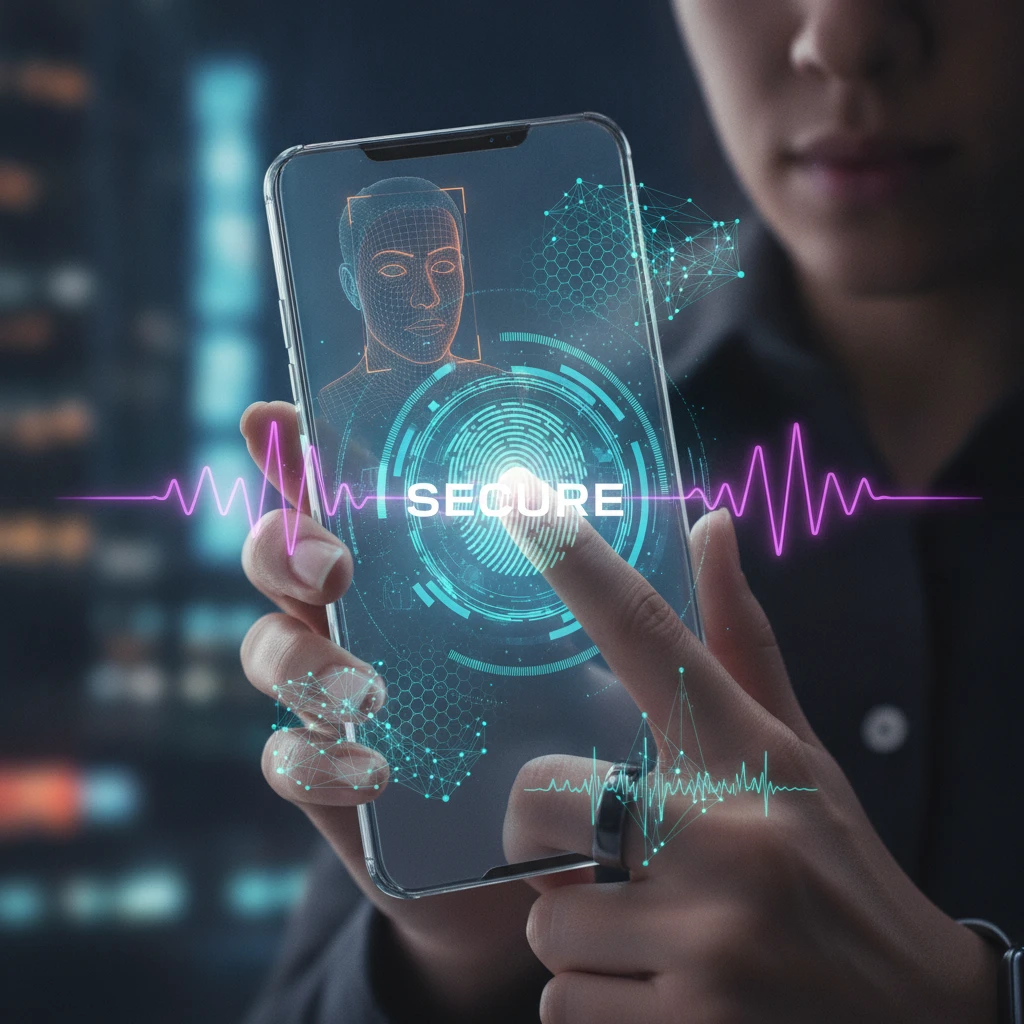
Biometric authentication uses physical or behavioral traits to check whether someone is an authorized user. Fingerprint sensors and facial recognition have made it familiar, but future devices may combine more signals, with artificial intelligence helping interpret them in context. That could make access smoother, yet it also raises important questions about privacy, accuracy, and control.
A useful way to judge these systems is to ask three things: what signal they collect, where they process it, and what happens when recognition fails. Biometrics can reduce reliance on passwords, but they are not secret in the same way a password is, and a body cannot be replaced if its data is exposed.
How Biometric Authentication Works Today
Biometric authentication compares a measured trait with a previously enrolled template to verify a claimed identity. Fingerprint recognition and facial recognition are common examples; the system generally checks whether a sample matches the template rather than storing a usable picture of the original trait.
During enrollment, a device captures biometric features and converts them into a mathematical representation. At sign-in, it creates a new sample and compares the two. If the match score meets a set threshold, access is granted. A higher threshold may reduce false acceptance but can also reject legitimate users more often.
- Fingerprint recognition measures ridge patterns or related features through an optical, capacitive, or other sensor.
- Facial recognition analyzes features such as the spacing and shape of facial landmarks. Results can depend on lighting, camera position, and sensor design.
- Voice recognition compares characteristics of a speaker’s voice. It can be convenient for hands-free use, though noise, illness, and recordings can affect reliability.
- Iris and retina scanning use patterns in the eye. Iris scanning is distinct from retina scanning, which examines blood-vessel patterns at the back of the eye; specialized sensors and user acceptance can limit everyday use.
Authentication differs from identification. Authentication asks, “Is this the enrolled user?” Identification asks, “Who is this person?” The distinction matters: a device that unlocks for its registered owner has a narrower task than a system searching a crowd against a large database.
Emerging Biometrics for Future Devices
Future devices may use behavioral biometrics and combine multiple signals, rather than depending on one fingerprint or face scan. These methods could check identity during ordinary interactions, but their usefulness will depend on accuracy, consent, and whether users can turn them off.
Behavioral biometrics look at patterns such as typing rhythm, how a person holds a phone, touch pressure, or the way they move. A device might use these signals to notice a sudden change after an initial unlock. Such patterns are probabilistic: a tired user, an injury, or a different keyboard can make familiar behavior look unusual.
Voice recognition may also become one signal among several. A smart speaker could consider a voice match alongside a spoken passphrase or a trusted device nearby. In a connected environment, an access decision might draw on a wearable, a phone, or a vehicle sensor, rather than asking for repeated scans.
Multimodal recognition combines two or more biometric methods, such as face and voice, or fingerprint and behavioral cues. Multiple signals may help when one is unavailable, but they can also collect more sensitive data and create more points of failure. Combining methods is not automatically safer; the system needs a clear policy for conflicts and fallback access.
How AI Could Change Authentication
Artificial intelligence and machine learning could help biometric systems adapt to changing conditions and detect suspicious inputs. These capabilities are possibilities, not guarantees: models can make errors, and their performance depends on training data, sensor quality, and careful testing.
A machine-learning model may account for ordinary changes in a user’s appearance, voice, or interaction habits. It could also assess signals together, such as whether a face image appears three-dimensional or whether a voice sample has signs of playback. Liveness detection is the name for checks that aim to distinguish a present person from a photo, mask, recording, or other spoof. No liveness test catches every attack.
AI may support continuous or risk-based authentication, where a device requests another check only when a situation seems unusual. That can reduce repeated prompts, but it also means a system is continuously interpreting behavior. A false alarm might lock out the owner; a missed warning could admit an attacker.
On-device processing can limit the need to send raw biometric samples to a remote server. It does not remove every risk: templates may still be exposed through a compromised device, and data may be shared through backup or account systems. Users should be able to find out what is processed locally and what leaves the device.
Where Biometrics May Appear Next
Biometric authentication may spread from phones to wearables, smart home devices, vehicles, and connected spaces. The most practical uses will be those that match the setting and offer a reliable alternative when a sensor cannot recognize its user.
Phones could combine a quick fingerprint or face check with a second signal for higher-risk actions, such as approving a payment. Wearables might verify a wearer while they use a device, though motion, fit, and battery limits can affect sensing. A smart home speaker could distinguish household members for personalized access, but voice recognition should not be treated as proof of identity for every sensitive command.
Vehicles may use biometrics to adjust driver settings or restrict access, while connected workplaces could use them at doors or shared terminals. These applications introduce different stakes. A missed phone unlock is inconvenient; a mistaken vehicle or building access decision could have wider consequences. Systems should therefore use stronger checks for consequential actions and provide a practical way to recover access.
Privacy, Security, and Fairness Challenges
Biometric systems bring privacy, security, and fairness risks because they handle sensitive traits that are difficult to change. Strong protection requires more than accurate matching: it also depends on limited collection, secure storage, informed consent, and a workable alternative.
A stolen password can be replaced. A face or fingerprint cannot. If biometric templates are breached, the impact may persist, especially if the same trait is used across services. Look for encryption, access controls, short retention periods, and clear explanations of whether data stays on the device or is sent to a provider.
Accuracy may vary across users and conditions. Lighting, camera quality, skin tone, age, disability, voice changes, and sensor placement can all affect results. Developers should test systems across relevant populations and publish meaningful performance information. Users need a non-biometric option that does not impose an unreasonable penalty.
Consent can be unclear in workplaces, public spaces, or shared homes, where people may feel unable to refuse. Spoofing is another concern: photographs, recorded speech, and synthetic media can challenge weak systems. Liveness detection helps, but it is one layer of defense, not a guarantee. Sensitive actions should have additional safeguards, and organizations should avoid collecting biometric data simply because a device can.
What to Look for in a Future Biometric System
A trustworthy biometric system should explain what it collects, process as much as practical on-device, and offer clear consent and non-biometric alternatives. Before enabling a feature, check its storage, sharing, recovery, and deletion controls.
- Clear purpose and consent: The device should state which trait it uses and what the feature unlocks. Enrollment should be optional where possible.
- Secure storage: Prefer systems that protect templates in a dedicated secure area and explain whether biometric data is uploaded or included in backups.
- Useful alternatives: A passcode, security key, or other recovery method should remain available if recognition fails or a sensor is unavailable.
- Transparent controls: Users should be able to review permissions, disable continuous checks, remove enrolled data, and understand how to reset access.
- Proportionate use: A quick biometric check may suit device unlocking; high-impact transactions may need a separate confirmation step.
For any new feature, ask: what is the fallback, and can the data be deleted? If the answers are vague, convenience may be arriving at the cost of control.
Frequently Asked Questions
How is biometric authentication different from a password? A password is something you know and can change; a biometric trait is something about you and is difficult or impossible to replace. Biometrics can simplify access, but a PIN or password remains useful as a backup.
Can biometric data be stolen or spoofed? Yes. Templates can be exposed, and weak sensors may accept imitations or recordings. Secure storage and liveness detection reduce some risks, but neither makes a system perfectly secure.
Will future devices combine multiple biometric methods? Some may. Multimodal authentication can provide another signal when one method fails, although it can increase data collection and complexity.
What should users look for in biometric privacy controls? Check for on-device processing, clear consent, deletion options, limited sharing, and a reliable non-biometric way to access the device or service.